The bigger phone needs a reason
The easiest mistake is treating Pro Max as the complete iPhone and Pro as the compromise. This year’s published camera specifications do not support that reading. Both get the variable-aperture main camera, the same listed telephoto and the same A20 Pro. The decision is much more personal: how much phone do you want to carry, and how often do you wish your current one lasted longer?
This is a comparison of Apple’s US specifications and Vietnam specifications, checked September 11, 2026—not a hands-on review. Apple lists preorders from September 12 and availability from September 18. We have not established matched retail battery, reception or camera tests for this pair.
Size is a daily cost
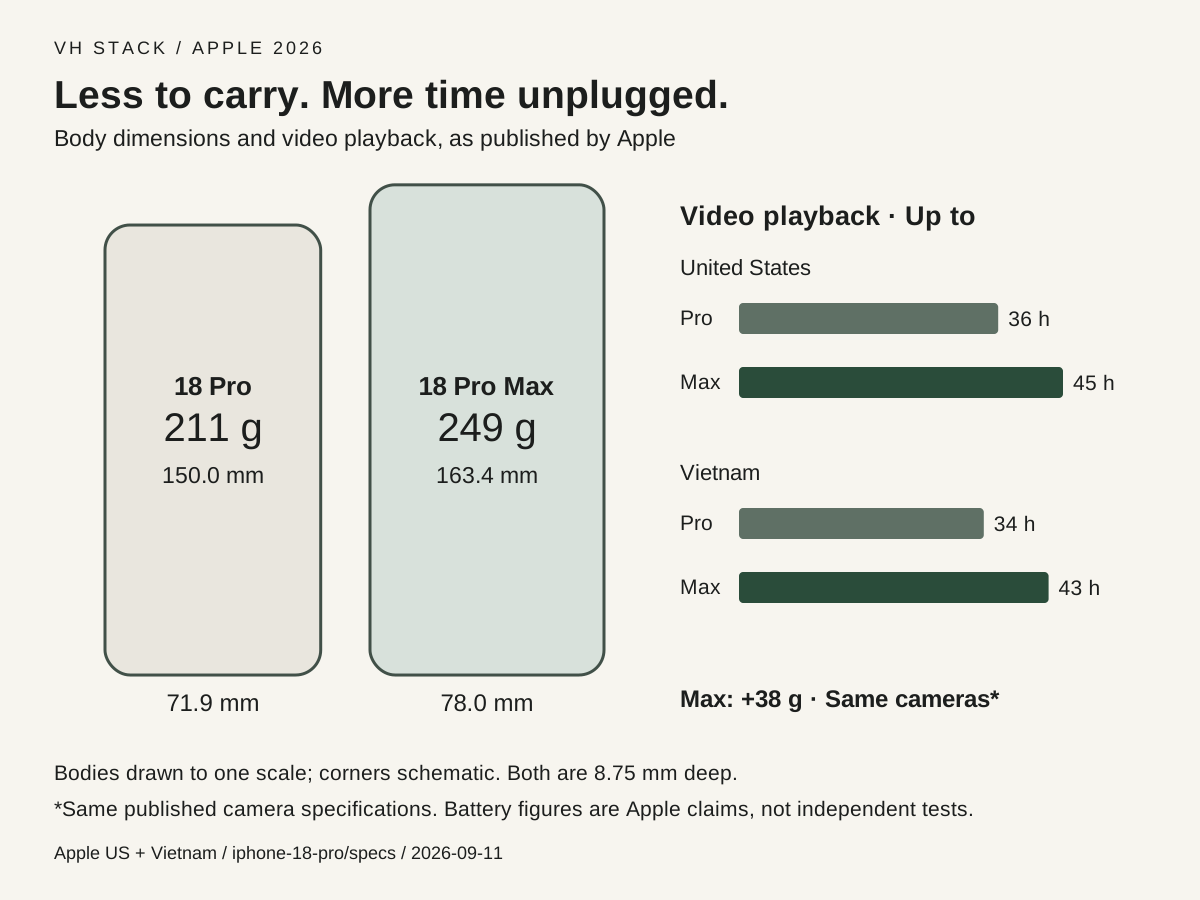
Original VH Stack diagram from Apple’s specifications. Body rectangles share a scale; corners are schematic, not a depiction of the screen or camera. Battery bars show Apple’s up-to video ratings, not our measurements.
Pro Max is 6.1 mm wider, 13.4 mm taller and 38 grams heavier, calculated from Apple’s dimensions. Both are listed at the same depth. Width matters when reaching across the keyboard; height matters when pulling down controls. Weight matters every time you hold the phone rather than resting it on a desk. A case adds another variable, so a bare showroom device is only the starting point.
The smaller Pro is not a lightweight phone in absolute terms. At 211 grams, it still deserves a proper handling check. But choosing it preserves the published Pro feature set while reducing the burden you carry all day. That is a meaningful advantage, not simply an admission that you could not stretch to the larger model.
Pro Max makes more sense if the phone is your main reading and viewing device. Its larger display gives photos, subtitles and editing controls more room. It does not have higher listed pixel density, a higher refresh-rate ceiling or a higher outdoor peak brightness than Pro. You are buying area, not a superior display tier—and not an iPad-style workspace just because the diagonal is larger.
When you can try both, open a long message, type a reply, reach for the top corner and hold each in landscape. Use your usual text size. If you habitually support the phone with two hands, Max’s size may be easy to accept. If you already dislike the weight of your current large phone, do not assume a longer battery specification will make that irritation disappear.
Battery is the strongest Max argument
There is a substantial gap in Apple’s ratings, not just a token reward for buying bigger. Within either market, Pro Max adds nine hours of rated video playback, seven hours of streamed video and six hours under Apple’s “typical use” profile. Those are differences between published up-to figures, not extra hours we can promise in your day.
The test types matter. Apple’s video footnote describes preproduction phones looping movies with specified settings, including Auto-Brightness and True Tone off. Its typical-use test combines passive and active use across apps on cellular networks. Neither is a claim of continuous screen-on time. Nor can the video gap tell us how much extra navigation, hotspot use or outdoor filming you will get.
For a traveler who often finishes the day far from an outlet, the higher rating is a sound reason to favor Max. For someone who works at a desk with a charger nearby, that reserve may be less valuable than a phone that is easier to hold. A power bank can be a flexible alternative for occasional long days, although carrying and connecting one has its own inconvenience.
Both models share Apple’s wired claim of up to 50% in around 15 minutes with a 60W-capable or higher AVS adapter and suitable USB-C cable. The footnote requires USB PD 3.1 or later with AVS and a 60W-capable cable; wattage alone is not enough. This is a half-charge claim from depleted devices, not proof of equal full-charge times. Do not buy Max expecting a separate faster-charging tier.
Same cameras, different handling
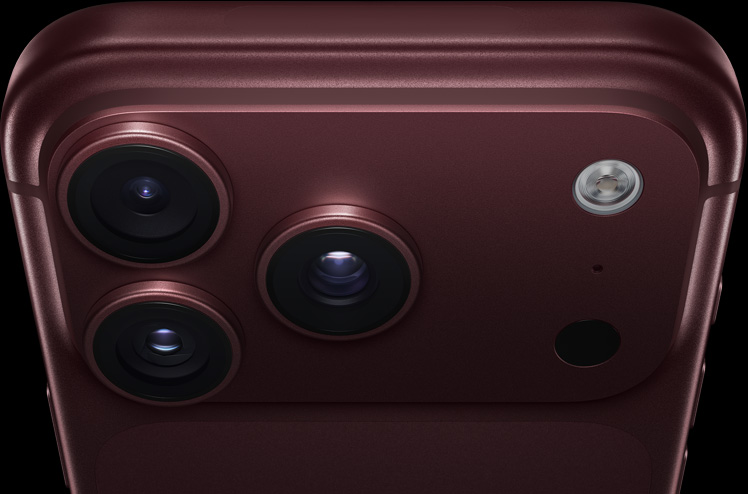
Image: Apple, showing iPhone 18 Pro in Burgundy. This is a product illustration of the camera hardware, not a Pro Max photograph or a sample shot.
Apple lists the same 48MP Fusion Main with four aperture settings, 48MP Ultra Wide and 48MP 4x Telephoto for both. The 18MP Center Stage front camera is shared too. There is no Max-exclusive longer lens, larger stated camera resolution or extra aperture setting in these sheets.
The distinction between 4x telephoto and 8x optical-quality output remains important. Apple describes the 100 mm 4x camera as 48MP and the enabled 200 mm 8x option as 12MP optical-quality. That is not a second dedicated 8x optical lens, on either phone. Likewise, variable aperture applies to the main camera, not all three rear lenses.
The practical attraction of Max for a photographer is the larger viewfinder and higher battery rating, not a listed image-quality upgrade. The smaller Pro may be easier to carry and bring out quickly. Neither handling judgment proves sharper photographs: grip, motion, lighting and processing still matter. Identical published capabilities also do not guarantee every output will be pixel-identical.
Both list ProRAW, Apple Log 2 and ProRes up to 4K/120 with external recording. If filming is the reason to buy, consider storage and external recording accessories alongside body size. Max’s extra endurance rating is useful evidence, but it is not a validated maximum recording duration or a thermal test. Our 18 Pro vs 17 Pro comparison explains why variable aperture can matter; it is not a reason to choose Max over this year’s smaller Pro.
Read the modem difference carefully
Apple explicitly lists an Apple C2 cellular modem for iPhone 18 Pro in both regional sheets. The Pro Max sections do not name a cellular modem. That is the verifiable distinction in the documentation. It does not establish which alternative chip Max uses, and absence of a C2 label is not, by itself, a teardown.
Do not confuse N1 with C2. Both phones list the N1 wireless networking chip, Wi-Fi 7 and Bluetooth 6; those shared features do not answer the cellular-modem question. Both US models list sub-6 GHz and mmWave 5G, while the Vietnamese models list sub-6 GHz. The smaller Pro’s C2 label therefore is not grounds to claim that it lacks mmWave on the US model.
Prelaunch coverage can muddy this topic. The MacRumors roundup we consulted is dated August 28 and discusses possible mixes of Apple and Qualcomm modems by market. That is rumor context, not confirmation of the modem inside a shipping Pro Max. We do not use it to override Apple’s current regional specification sheets.
More importantly, a chip name cannot tell you which phone holds a call better in your apartment. A meaningful comparison needs the same carrier, locations, software and signal conditions, including weak coverage and sustained data use. Until that evidence exists, neither “Apple integration” nor an assumed Qualcomm part deserves a reception win. Choose around verified size and battery differences; treat modem performance as an open question.
Buy the size, not the suffix
Both models offer the same listed storage tiers, from 256GB to 2TB. Compare the same capacity in the US Apple Store or Vietnam Apple Store, then include tax where applicable, accessories and any financing conditions. Do not mistake a storage upgrade or conditional carrier credit for the price difference between body sizes.
Imported stock needs another check. US models are eSIM-only; Vietnam’s sheets list nano-SIM plus eSIM and support for dual eSIM. Battery ratings differ by market too. A US figure should not become the promise for a Vietnamese unit, and the SIM difference alone does not establish an exact battery-capacity difference. Confirm the model, carrier compatibility, warranty arrangements and seller’s return conditions before paying.
Our default recommendation is Pro if you want the camera tools but have no clear reason for a bigger phone. Choose Max if you regularly read or edit on the phone, or if access to power is unreliable enough that the higher endurance rating earns the extra bulk. If your concern is reception or long-session heat, wait for relevant retail tests rather than paying for an assumption. The right purchase is the one that removes a recurring inconvenience—not the one with the longest name.
Sources
Checked September 11, 2026. Apple figures are manufacturer claims; buying recommendations are editorial judgments. No owner survey or hands-on testing is claimed.
- Apple US: specifications for both models and battery-test footnotes
- Apple Vietnam: regional dimensions, battery, modem and SIM details
- Apple: product imagery and launch schedule
- Apple US Store: current configurations and purchase conditions
- Apple Vietnam Store: local configurations and purchase conditions
- MacRumors: August 28 prelaunch roundup, used only as rumor context