Start with the phone you already own
The hardest competitor for iPhone 18 Pro is not a rival flagship. It is the iPhone 17 Pro that already holds your photos, fits your case and gets you through the day. A better new phone can still be a poor upgrade if its improvements solve problems you do not have.
This comparison concerns the 6.3-inch Pro in each generation, not Pro Max. That distinction matters particularly for battery life. As of September 10, 2026, Apple’s US launch page lists preorders for September 12 and availability from September 18. Apple Vietnam lists the same dates, with preorders at 19:00 Vietnam time. This is a launch-specification comparison, not a claim that we have lived with both retail phones.
The strongest reason to look at the new model is its main camera. The strongest reason to pause is how much of the existing Pro experience remains intact.
Aperture changes the photograph itself
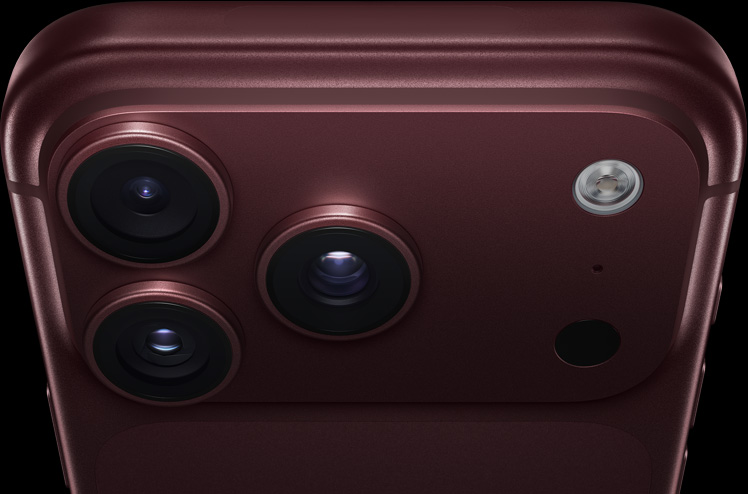
Image: Apple. Official product illustration of the rear camera hardware, not a camera sample or evidence of better image quality.
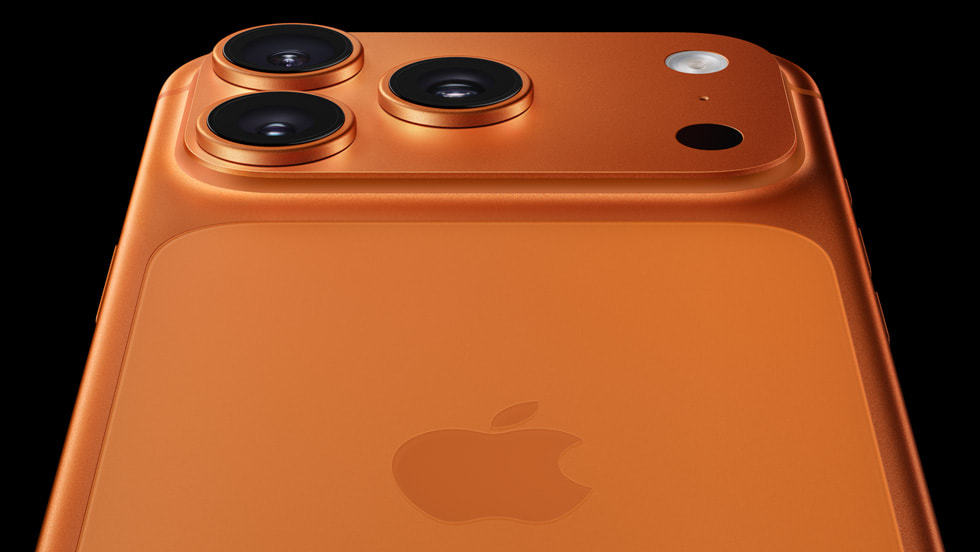
Image: Apple Newsroom. The previous generation’s camera layout; these differently framed promotional views are not a size comparison.
Apple specifies four apertures for the 18 Pro’s 48MP Fusion Main camera: ƒ/1.48, ƒ/1.8, ƒ/2.8 and ƒ/4.0. The 17 Pro’s main camera has a fixed ƒ/1.78 aperture. This is a change in the lens opening, not just another setting for software background blur.
A wider opening admits more light at a given shutter speed. A smaller opening can bring more of a scene into acceptable focus, at the cost of admitting less light. That creates a useful choice when photographing a product on a desk, a meal with several dishes or people standing at different distances. You may want more of the subject sharp rather than the strongest possible blur behind it.
For someone who shoots deliberately, that is more interesting than another automatic filter. The 18 Pro also lists Pro controls for aperture, shutter speed, white balance and a histogram. Those controls let you decide which compromise matters: motion blur, noise, exposure or depth of field. They do not remove the compromise.
In a dim restaurant, closing down to ƒ/4.0 is not a free improvement. The camera must compensate elsewhere, potentially with a slower shutter or higher sensitivity. A moving child can blur even when the table looks sharp. Conversely, opening to ƒ/1.48 gives the camera another low-light option, but a spec sheet cannot tell us how consistently faces retain detail or whether processing makes skin look more natural.
Nor does a phone lens become a full-frame camera simply because it offers aperture control. Sensor size, focus distance and framing still shape the result. Very small apertures can also introduce diffraction softness. More control is the verified advantage; universally sharper photos are not.
What it does not replace
It is easy to read “new Pro camera system” as if every lens has been reinvented. The published telephoto specification remains 48MP, 100 mm at 4x and ƒ/2.8 in both generations. Both also list an 8x optical-quality option. That wording should not be shortened to an independent 8x optical lens, and variable aperture belongs to the main camera, not the telephoto or ultra-wide.
If your 17 Pro disappoints mainly when photographing a distant performer in a dark venue, the headline aperture change does not directly alter the telephoto lens opening. Processing may improve, but that is a separate question requiring matched images. The useful comparison would include motion, difficult lighting and fine texture—not just a bright, static scene chosen to flatter the new phone.
The older Pro also already offers ProRAW, Apple Log 2 and ProRes recording up to 4K at 120 fps with external recording. If those tools cover your work, you are not choosing between a professional workflow and no workflow. You are deciding whether additional capture control earns its cost. For ordinary family photos and social posts, lighting, timing and distance from the subject may remain the larger constraints.
Sustained speed is the right question
Apple’s 18 Pro product page claims up to 40 percent better sustained performance than iPhone 17 Pro, crediting the A20 Pro, a next-generation vapor chamber and more thermally conductive materials. That is a manufacturer claim, not a frame-rate improvement measured by VH Stack.
The important word is “sustained.” Opening a messaging app quickly and keeping a demanding game responsive after a long session are different achievements. Cooling matters more when heat has time to accumulate: extended gaming, repeated exports or running a demanding local AI model. A peak benchmark does not establish what happens after the phone has warmed up.
But the 17 Pro is not starting without cooling. Apple’s original announcement describes its own vapor chamber integrated with the aluminum chassis. The new phone is refining an existing approach, not introducing it to an uncooled predecessor.
A useful independent comparison would hold the game version, graphics settings, ambient temperature and display brightness constant, then examine frame pacing and performance over time alongside surface temperature. A device that maintains more speed may still feel warm; warmth alone does not tell you whether the cooling is working badly. Case choice and charging during play can further complicate comparisons.
No matched independent retail test is established in this article, so the advertised gain should not become a promise of 40 percent more speed in your apps. If the 17 Pro already finishes your sessions without an objectionable slowdown, that unresolved advantage is a reason to wait rather than preorder.
Battery: keep the comparisons honest
The battery story is positive, but smaller than the Pro Max headline suggests. The figures in the cards above give the smaller Pro three additional hours of Apple-rated video playback in either market. The six-hour improvement on Apple’s launch page explicitly concerns Pro Max. Comparing an 18 Pro Max with a 17 Pro would exaggerate the generational gain by changing the phone size as well.
Even a correctly matched number is not a prediction of your day. Apple’s 18 Pro video test uses preproduction devices repeatedly playing a movie, with settings including Auto-Brightness and True Tone turned off. Navigation in bright sunlight, weak cellular reception and camera use are different workloads. You should not read those video hours as screen-on time.
Apple also introduces a “typical use” figure for 18 Pro: up to 24 hours on the US sheet and 23 hours on the Vietnam sheet. Its footnote describes a representative profile based on median usage, combining passive and active use across apps. That is more relevant in concept to daily ownership, but it remains Apple’s model of usage, not independent observation. There is no equivalent 17 Pro figure in the cited specification sheet to calculate a mixed-use improvement from.
Faster wired charging may be easier to appreciate than a longer video loop if you regularly have only a short break near an outlet. However, the 18 Pro’s fastest claim requires a 60W-capable adapter with Adjustable Voltage Supply, plus a suitable cable; Apple’s footnote specifies USB PD 3.1 or better with AVS and a 60W-capable USB-C cable. The wattage printed on an old charger alone is not enough to establish compatibility. Neither generation’s half-charge claim describes a complete zero-to-full charge.
US and Vietnam are not interchangeable
The regional difference is not just currency. Both US specification sheets describe eSIM-only phones, while the Vietnamese sheets list nano-SIM plus eSIM and dual-eSIM support. The US sheets also list mmWave 5G; the Vietnamese sheets list sub-6 GHz. Confirm the exact model and carrier support before treating an imported phone as equivalent to local stock.
Battery ratings differ too, as the comparison cards show. Use the specification for the unit you intend to buy, not whichever region provides the larger number. The existence of a physical SIM tray and different ratings does not, by itself, let us assign an exact battery-capacity difference or explain every hour of runtime.
There is a software caveat as well: Apple’s launch copy says Siri AI starts in English, and availability varies by feature and region. A Vietnamese product page is not proof that every advertised AI feature works in Vietnamese at launch. Do not fund a hardware upgrade around an assistant workflow before checking the language and features you actually need.
When keeping the 17 Pro wins
Keeping the older phone is the stronger choice when its camera already produces the images you want, its performance holds up in your actual apps and its battery still fits your routine. You keep the high-refresh display, established camera tools and familiar setup without paying to improve a spec you rarely notice.
If battery life is the only complaint, investigate it before replacing the whole device. Review battery health and app activity, then compare a battery-service quotation with the net cost of upgrading. A replacement battery will not add variable aperture or a faster chip, but it may address the actual reason the phone feels less dependable. It is not a guaranteed cure for poor reception or a power-hungry app.
Calculate the upgrade using the same storage tier: new-phone cost, taxes where applicable, accessories and any financing conditions, minus a realistic trade-in or resale value. A headline carrier credit is not the same as unconditional cash, and a US offer is not a Vietnam purchase price. There is no single defensible upgrade cost without those details.
Buying a discounted 17 Pro is a different decision from keeping one you own. A small discount may not justify choosing the older camera and battery rating. With a used unit, battery condition, repair history and warranty matter as much as the model name. The case for keeping an already reliable phone should not be mistaken for advice to buy any old stock at any price.
Who should move to the 18 Pro?
The most credible upgrader can name a concrete limitation: a close-up scene that needs optical depth control, a demanding session where the existing phone slows down, or a charging routine that benefits from a faster wired top-up. Aperture control is the clearest new capability. Sustained speed and everyday endurance still need evidence from retail phones doing comparable work.
If your goal is a fundamentally different workspace rather than another generation of the same form factor, our flagship foldable comparison addresses that separate trade-off. For a satisfied 17 Pro owner, though, there is no need to invent a problem to justify the launch. Let the new camera prove its value in the scenes you shoot. If it does not, keeping a good phone is the successful decision—not the consolation prize.
Sources
Specifications and launch details checked September 10, 2026. This is an editorial assessment of published hardware and test conditions, not a hands-on review or a survey of owner opinion.
- Apple US: iPhone 18 Pro specifications, battery and charging footnotes
- Apple Vietnam: iPhone 18 Pro regional specifications
- Apple Support US: iPhone 17 Pro technical specifications
- Apple Support Vietnam: iPhone 17 Pro technical specifications
- Apple US: iPhone 18 Pro launch schedule and sustained-performance claim
- Apple Vietnam: local launch schedule and feature availability
- Apple Newsroom: iPhone 17 Pro cooling design and original camera capabilities